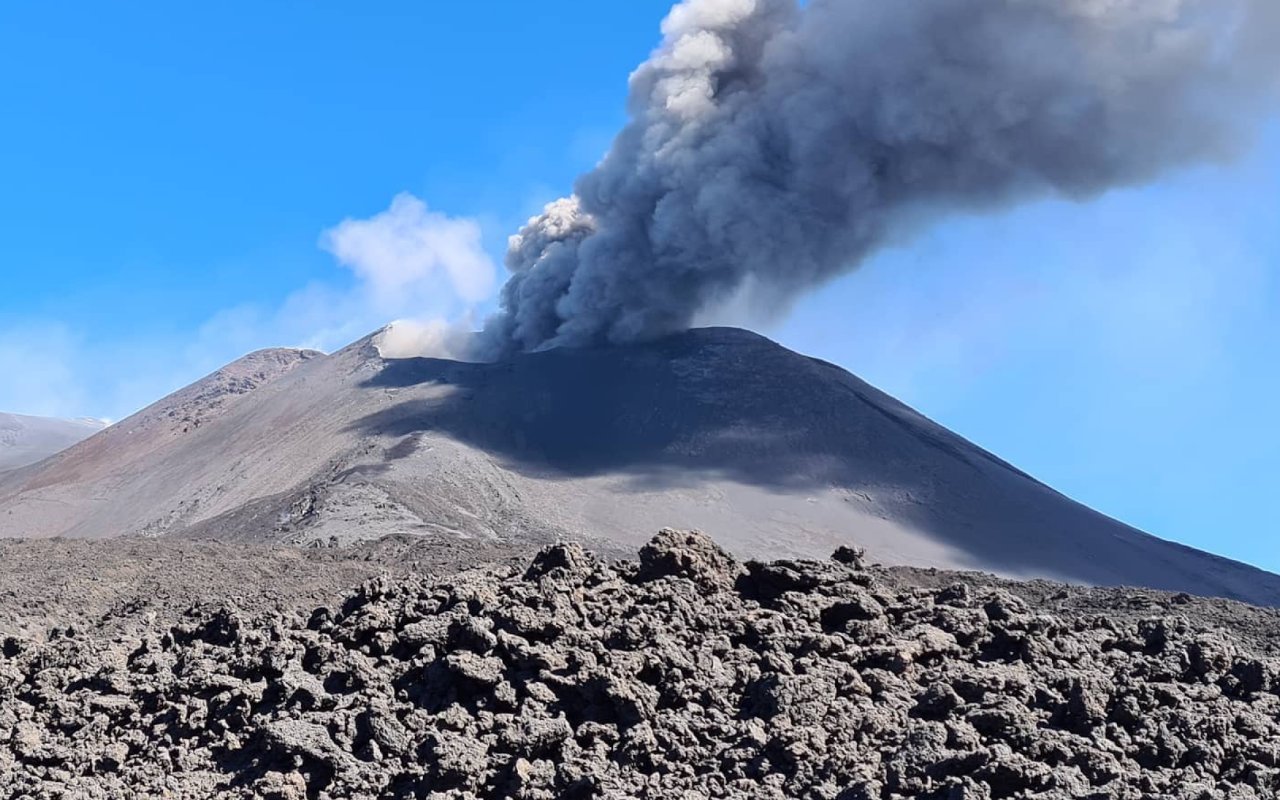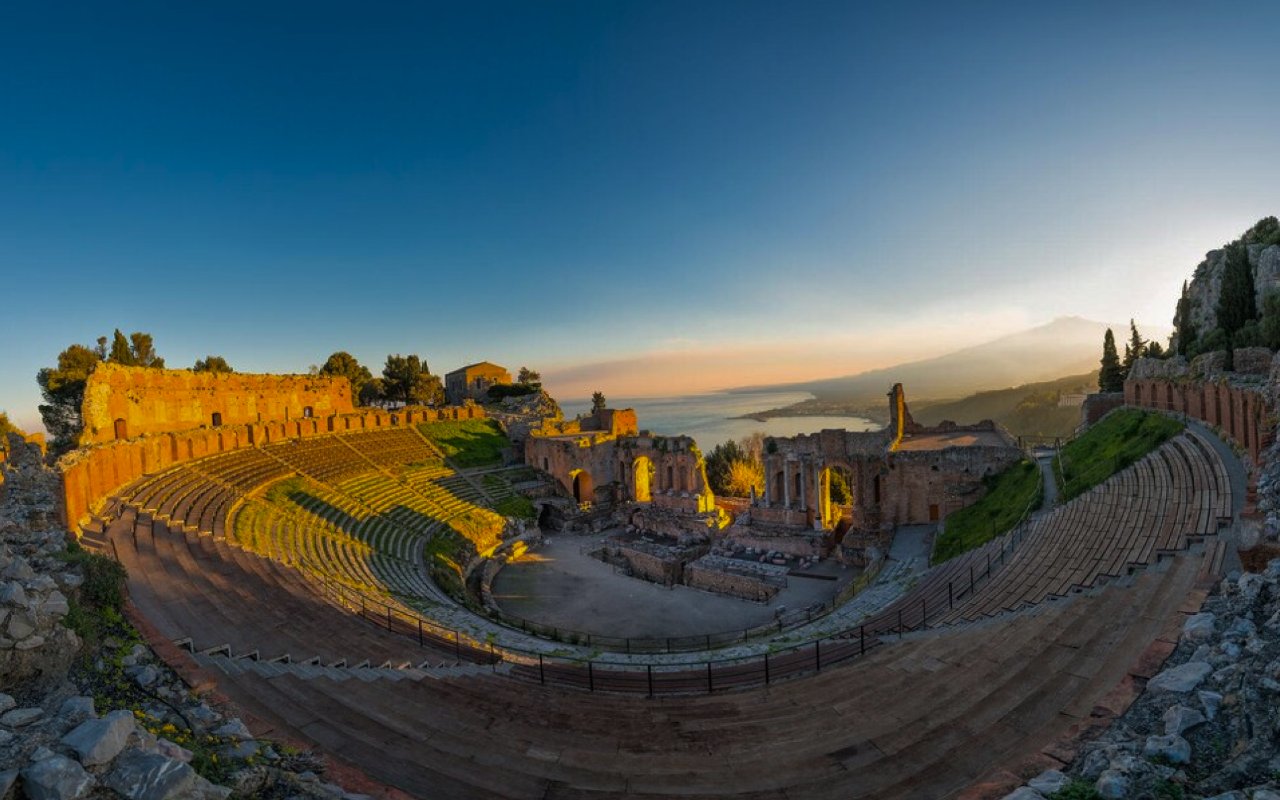
Mount Etna, one of the most iconic and active volcanoes in the world, is a majestic presence on the east coast of Sicily. Besides its power and beauty, Etna is also shrouded in a rich mythology that has fascinated it for centuries. In this article we will explore the connection between Etna and its mythology, revealing the stories and legends surrounding this imposing fire giant.
Etna in Greek and Roman mythology
In Greek mythology, Etna was considered the home of the Cyclops Polyphemus. According to legend, Polyphemus was one of the sons of the god Poseidon and the nymph Toosa. He was a giant with one eye in the center of his forehead. Polyphemus met the Greek hero Odysseus on his return journey from the Trojan War. Odysseus and his companions hid in Polyphemus’ cave, but the cyclops captured them and began to devour some of Odysseus’ companions. To save himself and the rest of the crew, Ulysses offered Polyphemus very strong wine. When the Cyclops fell asleep drunk, Odysseus blinded his eye with a long rod. Enraged Polyphemus tried to grab Odysseus and his companions as they fled the cave, but failed. Ulysses and his men escaped, and Polyphemus tried to take revenge by invoking his father Poseidon to curse them. According to legend, Etna erupted due to the wrath of Poseidon, and the volcano became Polyphemus’ prison.
In Roman mythology, Etna was associated with the god Vulcan, the god of fire and the forge. Vulcan was the son of Jupiter (Zeus in Greek mythology) and the goddess Hera (Hera in Greek mythology). He was considered a skilled blacksmith and worked in his underground laboratory under Etna, where he forged the weapons of the gods. Legend has it that Vulcan was expelled from Olympus by Jupiter due to his disagreements with the other gods. During his exile, Vulcan found refuge on Etna and continued to work in his volcanic forge, creating weapons and objects of great beauty. The eruption of Etna was often associated with the activities of Vulcan, who, according to legend, got angry and caused the volcano to erupt when he felt offended or frustrated.
In both Greek and Roman mythology, Etna represented the destructive force of fire and was associated with powerful deities. Today, Etna remains one of the most active volcanoes in the world and continues to influence the geography and life on Sicily.
The myth of Tifeo and his imprisonment under Etna
Another fascinating story linked to Etna is that of Tifeo, also known as Typhon, he was a giant with monstrous and terrible features. He was the son of Gea, the goddess of the Earth, and of Tartarus, the abyss of the Underworld. According to legend, Typhon was so powerful that he threatened the very gods of Olympus, including Zeus, the king of the gods.
Typhon rebelled against the gods and raged against them with unstoppable rage. During the epic fight that followed, Zeus had to face the devastating power of Typhon. With lightning and storms, Zeus managed to defeat him and imprisoned him under Etna, which according to some myths was the place where Zeus had defeated him.
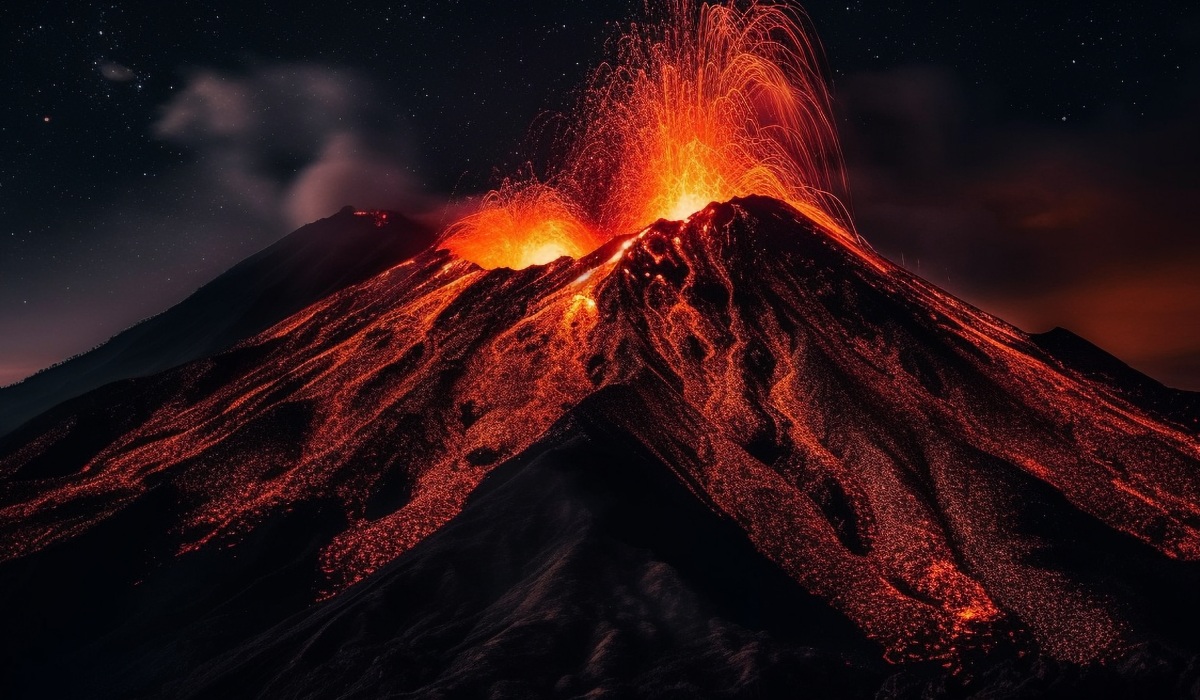
Legend has it that Tifeo was trapped under the mountain and that the volcanic eruptions of Etna represented his fury and the desire to get rid of him. It was said that whenever Typhon stirred and moved under the mountain, Etna erupted with flames, smoke and lava, as if he were trying to free himself from its confinement.
The myth of Tifeo and his imprisonment under Etna represent the struggle between the forces of nature and divine power. Typhon is a symbol of brutal and uncontrollable strength, while his imprisonment underlines the triumph of the Olympian gods and the order established by Zeus.
Even today, the periodic eruption of Etna is often associated with the myth of Tifeo and continues to inspire stories and legends about the power and fury of nature.
Popular Sicilian legends of Etna
In addition to Greek and Roman mythology, Etna is shrouded in numerous legends and popular Sicilian traditions. These stories handed down from generation to generation often give Etna a personality and a soul of its own. Some stories tell of encounters with magical creatures and spirits that dwell on the slopes of the volcano, making Etna a place of mystery and wonder.
Etna, with its imposing presence and rich mythology, is an unparalleled natural and cultural treasure. Its connection with Greek and Roman mythology, the story of Typhon and Sicilian popular legends make it a fascinating place, where the fire of the earth merges with the stories of humanity.
Etna continues to inspire wonder and inspiration, remaining a powerful symbol of the power of nature and our imagination. Explore the volcano and its enchanted places with our tours.